
Bats in the attic? Don't seal them in.
North Shore Wildlife gets bats out of your home with humane one-way exclusion, then seals every entry point so they can't move back in. No poison, ever.
- Humane exclusion
- No poison
- Full entry-point sealing
- Written warranty
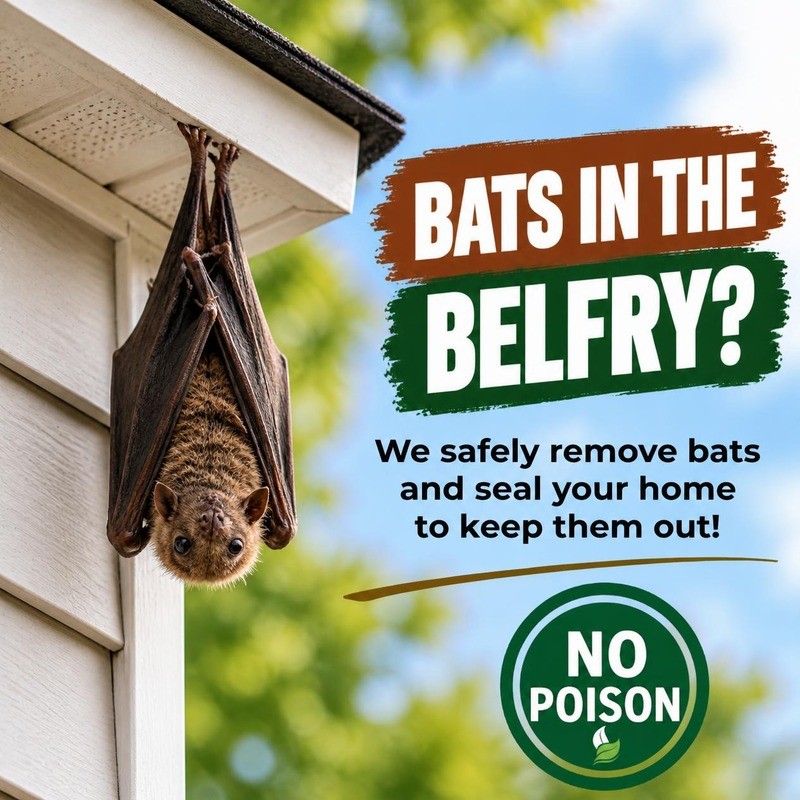
Get them out. Keep them out.
Bats don't need a big opening to get into a house. A gap around a roofline, soffit, chimney or vent can be enough, and they can use openings as small as about half an inch.
The common mistake is plugging the hole. If bats are still inside, sealing an active entry can trap them in the structure and create a much bigger problem. We inspect first, exclude humanely, then seal the house so the next colony can't move in.
How we solve it for good
A complete bat exclusion, not a quick patch.
Inspect
We check the attic, soffits, roofline, vents and chimney to find every active exit and entry point.
Exclude
One-way bat valves go on active exits so bats can leave but can't fly back in.
Seal
Once they're out, we close every re-entry point with durable exclusion materials.
Protect
Guano cleanup when needed, and written warranty terms on the completed exclusion.
Timing matters. We follow the rules.
Bat colonies are protected in Massachusetts. Exclusions are only allowed during set windows, which protect young bats that can't fly yet.
Heard bats outside those dates? Call anyway. We'll inspect, explain the plan and reserve your spot in the next window.
Bat removal FAQ
Questions North Shore homeowners ask us.
Are bats dangerous to have in my attic?
A bat colony inside a home should be handled professionally. Bats are wild animals and can carry rabies, though most exposures come from direct contact. If you find a bat in your living space, don't handle it.
Can I just seal the holes myself?
Not if bats may still be inside. Sealing an active entry can trap them in the structure. Proper exclusion uses one-way devices and carefully timed sealing.
When can bats legally be excluded in Massachusetts?
Colony exclusions are allowed during May and again from August 1 through October 15.
What if I hear bats and it's not an exclusion month?
Call us. We'll inspect, confirm where they're getting in and book your exclusion for the next allowed window.
Can bats get through very small openings?
Yes. Bats can use openings around one-half inch or larger.
Do you remove bat guano?
When cleanup is part of the project, we can address accumulated guano, contaminated insulation and odors.
Do you provide a warranty?
Yes. Completed exclusions come with written warranty terms so you know exactly what's covered.
Bat exclusion across the North Shore
Serving Essex County, from the New Hampshire line to Saugus. Call or text and talk to a real person.
- Salisbury
- Amesbury
- Newburyport
- Newbury
- West Newbury
- Haverhill
- North Andover
- Georgetown
- Ipswich
- Topsfield
- Danvers
- Peabody